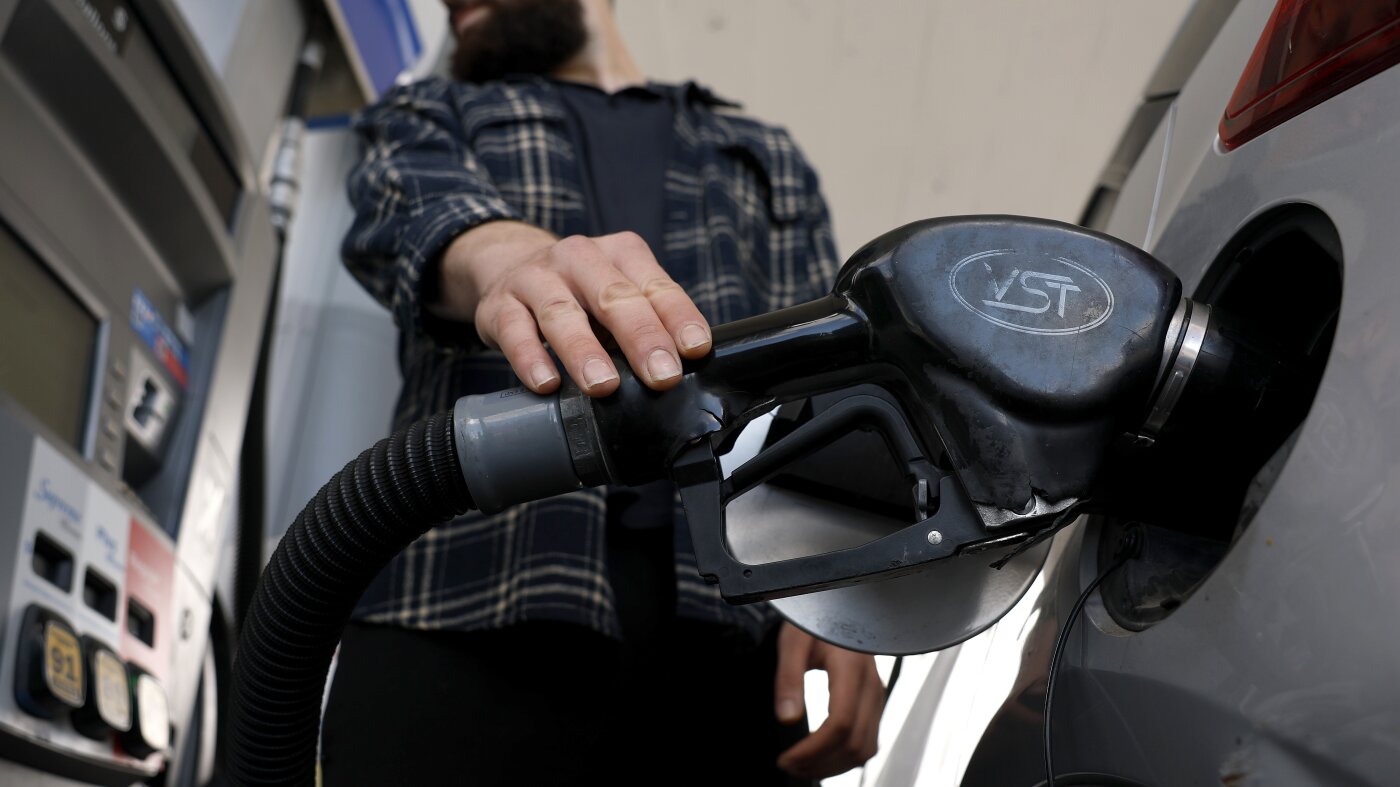
trend indicators The service focuses on stock market updates including earnings results and technical price movements. As the national average for a gallon of gasoline reaches $4.55 heading into one of the busiest travel weekends, consumers are evaluating ways to cut fuel costs. Options such as driving slower, switching to electric vehicles, or avoiding driving altogether may offer relief. This trend could influence broader energy demand and consumer spending patterns.
Live News
trend indicators Investors these days increasingly rely on real-time updates to understand market dynamics. By monitoring global indices and commodity prices simultaneously, they can capture short-term movements more effectively. Combining this with historical trends allows for a more balanced perspective on potential risks and opportunities. Access to multiple timeframes improves understanding of market dynamics. Observing intraday trends alongside weekly or monthly patterns helps contextualize movements. The national average for a gallon of gasoline stands at $4.55, according to recent data, as America prepares for one of the busiest travel weekends of the year. With prices remaining elevated, consumers are exploring various methods to reduce fuel expenses. Among the suggested approaches are driving at slower speeds to improve fuel efficiency, considering electric vehicle (EV) adoption, or curtailing travel entirely when possible. These strategies reflect a broader consumer response to sustained high fuel costs, which may affect travel behavior and household budgets. The timing of this price level—coinciding with peak travel demand—highlights the tension between necessary mobility and rising expenses. Drivers are reportedly adjusting habits, such as avoiding rapid acceleration and reducing idling, while also evaluating longer-term shifts like purchasing more fuel-efficient or electric vehicles. Public transit and carpooling are also being mentioned as alternatives, though their availability varies by region. The situation underscores the immediate financial pressure on households and the potential for lasting changes in transportation choices.
Rising Gas Prices Prompt Consumer Strategies: Slower Driving, Electric Vehicles, and Reduced Travel Observing correlations between different sectors can highlight risk concentrations or opportunities. For example, financial sector performance might be tied to interest rate expectations, while tech stocks may react more to innovation cycles.Stress-testing investment strategies under extreme conditions is a hallmark of professional discipline. By modeling worst-case scenarios, experts ensure capital preservation and identify opportunities for hedging and risk mitigation.Rising Gas Prices Prompt Consumer Strategies: Slower Driving, Electric Vehicles, and Reduced Travel Market participants frequently adjust dashboards to suit evolving strategies. Flexibility in tools allows adaptation to changing conditions.Investors often rely on both quantitative and qualitative inputs. Combining data with news and sentiment provides a fuller picture.
Key Highlights
trend indicators Some traders use alerts strategically to reduce screen time. By focusing only on critical thresholds, they balance efficiency with responsiveness. Understanding cross-border capital flows informs currency and equity exposure. International investment trends can shift rapidly, affecting asset prices and creating both risk and opportunity for globally diversified portfolios. The $4.55 average gasoline price may have several implications for the broader economy and sector dynamics. First, historically elevated fuel costs could dampen discretionary spending in other areas as consumers allocate more income to transportation. This might particularly affect retail and hospitality sectors dependent on travel and leisure. Second, the price level could accelerate interest in electric vehicles and fuel-saving technologies, potentially boosting EV adoption rates. However, the pace of transition would likely depend on vehicle availability, charging infrastructure, and incentives. Third, higher gas prices may influence oil demand expectations, possibly leading to shifts in refinery output and inventory strategies. Market participants could watch for changes in driving patterns, such as reduced vehicle miles traveled, which might temper crude oil demand growth. These factors collectively suggest that consumer behavior in response to gas prices warrants close monitoring for signals of evolving energy consumption trends.
Rising Gas Prices Prompt Consumer Strategies: Slower Driving, Electric Vehicles, and Reduced Travel Stress-testing investment strategies under extreme conditions is a hallmark of professional discipline. By modeling worst-case scenarios, experts ensure capital preservation and identify opportunities for hedging and risk mitigation.Scenario planning is a key component of professional investment strategies. By modeling potential market outcomes under varying economic conditions, investors can prepare contingency plans that safeguard capital and optimize risk-adjusted returns. This approach reduces exposure to unforeseen market shocks.Rising Gas Prices Prompt Consumer Strategies: Slower Driving, Electric Vehicles, and Reduced Travel Monitoring multiple indices simultaneously helps traders understand relative strength and weakness across markets. This comparative view aids in asset allocation decisions.Data-driven insights are most useful when paired with experience. Skilled investors interpret numbers in context, rather than following them blindly.
Expert Insights
trend indicators Visualization of complex relationships aids comprehension. Graphs and charts highlight insights not apparent in raw numbers. Investors often balance quantitative and qualitative inputs to form a complete view. While numbers reveal measurable trends, understanding the narrative behind the market helps anticipate behavior driven by sentiment or expectations. From an investment perspective, the current gas price environment presents both opportunities and risks across various sectors. Energy companies might benefit from elevated margins if crude costs remain favorable, but sustained high prices could eventually dampen demand and consumption. The automotive industry could see increased interest in electric and hybrid models, though near-term adoption may be constrained by supply chains and upfront costs. Consumer discretionary firms tied to travel, such as airlines and hotels, might face headwinds from reduced trip frequency or shorter distances. Additionally, utility and renewable energy companies could be well-positioned as consumers seek alternatives to gasoline. However, these trends are uncertain and depend on broader economic conditions, regulatory policies, and technological advancements. Investors are advised to consider these factors cautiously, as market reactions may vary. This analysis is for informational purposes only and does not constitute investment advice.
Rising Gas Prices Prompt Consumer Strategies: Slower Driving, Electric Vehicles, and Reduced Travel Predicting market reversals requires a combination of technical insight and economic awareness. Experts often look for confluence between overextended technical indicators, volume spikes, and macroeconomic triggers to anticipate potential trend changes.While technical indicators are often used to generate trading signals, they are most effective when combined with contextual awareness. For instance, a breakout in a stock index may carry more weight if macroeconomic data supports the trend. Ignoring external factors can lead to misinterpretation of signals and unexpected outcomes.Rising Gas Prices Prompt Consumer Strategies: Slower Driving, Electric Vehicles, and Reduced Travel Analyzing trading volume alongside price movements provides a deeper understanding of market behavior. High volume often validates trends, while low volume may signal weakness. Combining these insights helps traders distinguish between genuine shifts and temporary anomalies.Predictive tools provide guidance rather than instructions. Investors adjust recommendations based on their own strategy.